

Table of Contents
- Understanding Mesquite Wood and Arizona's Climate
- How to Clean Mesquite Wood Furniture
- Wood Furniture Care in Dry Climates
- Protecting Wood Furniture from Sunlight
- How Often to Oil Mesquite Furniture
- Protecting Mesquite Furniture from Heat, Spills, and Damage
- Diagnosing and Addressing Common Mesquite Wood Issues
- Acclimation and Indoor Versus Outdoor Mesquite Care
- Frequently Asked Questions
Last Updated: October 19, 2026
Understanding Mesquite Wood and Arizona's Climate
Mesquite wood is one of the most distinctive and challenging materials, and mesquite furniture care requires understanding both the wood's properties and Arizona's climate.
Mesquite is a dense hardwood with irregular grain and natural color variation.
The real challenge is matching your care routine to Arizona's climate. Summer temperatures can exceed 110°F while humidity drops below 10%, and indoor humidity typically ranges between 15-30%, far below the 40-55% wood prefers.
How to Clean Mesquite Wood Furniture
Cleaning mesquite furniture requires a gentle touch: remove dust and surface dirt without introducing excess moisture or harsh chemicals that damage the finish or grain.
Routine Dusting and Surface Cleaning
Start with regular dusting. Dust traps moisture and scratches the finish if left to build up. Use a soft, lint-free cotton or microfiber cloth, dusting in the direction of the grain.
For routine cleaning, a dry cloth usually suffices. For stubborn dust or light soil, barely dampen a cotton cloth, wring it out thoroughly, and wipe gently along the grain.
Avoid commercial polishes with silicone or wax unless formulated for mesquite; many leave a buildup that dulls the wood and traps dust. Test any cleaner on an inconspicuous area first.
Damp-Wiping and Drying Methods
When dusting isn't enough, damp-wipe with distilled water if possible, since tap water can leave mineral deposits on mesquite's porous surface.
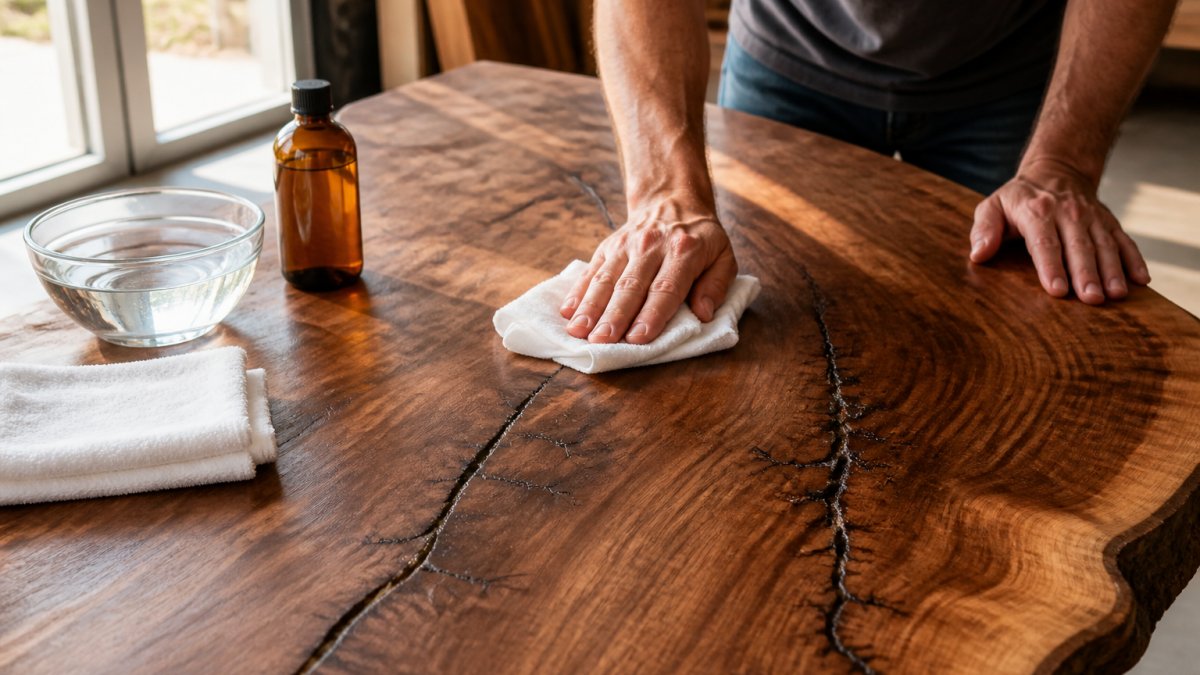
Speed is key: mesquite absorbs water quickly, and standing moisture can raise the grain or stain. Dry immediately rather than letting the wood air-dry.
Wood Furniture Care in Dry Climates
Arizona's low humidity is both a blessing and a curse: it prevents mold and mildew, but it pulls moisture from wood at an accelerated rate, making preventive care critical.
Managing Indoor Humidity Levels
The ideal indoor humidity for wood furniture is 40-55%, but most Arizona homes sit between 15-30%.
You can't change Arizona's outdoor climate, but you can manage indoor humidity. A humidifier helps, especially in winter when heating dries the air further; aim for 35-45%.
Monitor humidity with an inexpensive gauge placed near your mesquite furniture. Some seasonal variation is expected, but extreme swings accelerate wood movement and damage.
If possible, cluster mesquite pieces in the same room; grouping furniture creates a microclimate where humidity is slightly more stable, especially helpful for high-value pieces like live-edge dining tables.

Preventing Cracking and Checking
Cracking and checking, the small radial checks on wood surfaces, happen when mesquite loses moisture too quickly: the outer surface shrinks faster than the interior, creating internal stress.
Prevention beats repair.
Second, maintain consistent indoor humidity. Seasonal 15-30% swings stress the wood; keeping it stable, even in the lower-30s, reduces the stress that leads to checking.
Third, apply finish regularly. A quality finish acts as a moisture barrier, slowing moisture loss and gain. A well-maintained finish is your best defense against checking and cracking.
Protecting Wood Furniture from Sunlight
Arizona's intense sun is brutal on wood furniture: UV rays fade wood color, break down finishes, and cause uneven fading when furniture sits in direct sunlight part of the day.
Mesquite's rich browns, blacks, and reds fade with UV exposure.
The solution: minimize direct sunlight. Position mesquite away from windows with strong afternoon sun, or use UV-blocking cellular shades or films that filter the harshest rays while still letting light in.
For outdoor mesquite pieces, even on covered patios, UV protection is more critical.
How Often to Oil Mesquite Furniture
The answer depends on your finish type, home humidity, and how much the furniture is used.
Choosing the Right Finish and Oil
Mesquite furniture typically comes with one of three finish types: oil, wax, or a polyurethane-based topcoat. Each requires different maintenance.
Oil finishes penetrate the wood and require regular reapplication.
Wax finishes sit on top of the wood and also require periodic reapplication, typically every 6-12 months.
Polyurethane or lacquer topcoats form a harder, more durable surface and require less frequent maintenance, often just annual inspection and touch-ups if needed.
At Mt. Modern, our mesquite pieces like the Monsoon Strike Coffee Table and Monsoon Strike End Table are finished to order with your choice of protective coatings.


Seasonal Maintenance Schedule
Arizona's seasonal changes demand a maintenance rhythm. Here's a practical schedule:
| Season | Task | Frequency | Why |
|---|---|---|---|
| Summer | Check humidity; run humidifier if needed | Weekly | Extreme dryness stresses wood |
| Summer | Light dusting and inspection | Weekly | Dust accumulates quickly; catch issues early |
| Fall | Oil or wax application (if needed) | Once | Prepare for winter heating season |
| Winter | Maintain humidifier; monitor humidity | Ongoing | Heating systems dry indoor air further |
| Spring | Inspect for winter damage; dust thoroughly | Once | Check for checking, warping, or finish wear |
| Year-round | Avoid direct sunlight | Ongoing | Prevents fading and UV damage |
The key is consistency. A piece that gets regular attention, dusted weekly, oiled seasonally, kept away from extreme conditions, will look better and last longer than one that's neglected for months then given emergency treatment.
Protecting Mesquite Furniture from Heat, Spills, and Damage
Arizona's heat and your home's daily activities pose real risks to mesquite furniture. Prevention is easier than repair.
Using Coasters, Pads, and Protective Barriers
Coasters are non-negotiable for mesquite furniture, especially dining tables and end tables. Water rings from glasses, coffee cups, and vases can stain mesquite and raise the grain.
Felt pads under decorative objects, lamps, and vases protect the finish from scratches and allow pieces to move slightly as humidity changes.
For dining tables, placemats and table runners protect the surface from spills, heat from hot dishes, and scratches from plates and utensils. These aren't just decorative, they're functional protection. A placemat is far cheaper than refinishing a mesquite tabletop.
Handling Temperature Fluctuations and Placement
Arizona's temperature swings, sometimes 40°F between day and night, stress wood. While you can't control outdoor temperature, you can control where furniture sits indoors.
Keep mesquite pieces away from heating vents, air conditioning units, and areas with strong airflow. These create localized temperature and humidity changes that accelerate wood movement.
Placement near windows is also risky, not just for UV exposure but for temperature. A south-facing window can get very hot on a summer afternoon, then cool rapidly at night. This thermal cycling stresses the wood.
Diagnosing and Addressing Common Mesquite Wood Issues
Even with good care, mesquite can develop problems. Knowing what you're looking at helps you respond appropriately.
Warping, Checking, and Joint Movement
Warping is when the wood surface becomes uneven, cupped, twisted, or bowed. Checking is when small radial cracks appear on the surface.
Minor checking is cosmetic and common in mesquite, especially on large slabs. It's part of the wood's character and doesn't affect function.
Warping is more serious. Slight warping may be invisible when the piece is in use but can affect how drawers slide or how a tabletop sits.
Joint movement, a slight separation at corners or where legs meet the top, is often reversible. It usually means the wood has dried out and shrunk.
Repairing Surface Wear and Scratches
Light surface scratches are inevitable with use. For pieces with oil finishes, light sanding with fine-grit sandpaper (220-grit or higher) followed by re-oiling often makes scratches disappear.
Deeper scratches or gouges require more work. If the scratch doesn't go through the finish into the raw wood, it's usually cosmetic.
For pieces with polyurethane finishes, light scratches can sometimes be buffed out with fine steel wool and a fresh coat of finish.
Water stains from spills or humidity are common. Light stains often disappear when humidity rises and the wood re-absorbs moisture, lightening the stained area.
Acclimation and Indoor Versus Outdoor Mesquite Care
When you first bring mesquite furniture home, it needs time to acclimate to your home's humidity and temperature. This is critical and often overlooked.
Mesquite furniture is typically dried to around 8-12% moisture content before finishing. Your Arizona home likely has humidity around 20-30%.
Place furniture in its final location and leave it undisturbed for at least two weeks.
For outdoor mesquite furniture, a covered patio table, for example, the acclimation period is longer and more critical.
The distinction matters: indoor mesquite furniture in a climate-controlled home is relatively stable once acclimated.
Caring for mesquite furniture in Arizona isn't complicated, but it does require understanding your climate and committing to a routine. Modern, like our signature Monsoon Strike collection with its distinctive fractal-burn detailing, that investment pays dividends when you maintain it properly.
Frequently Asked Questions
How often should you oil mesquite furniture?
Oil mesquite wood furniture every 3-6 months in normal conditions, or every 1-3 months in very dry climates. The frequency depends on your finish type and humidity levels. Matte or raw finishes need more frequent oiling than polyurethane-sealed pieces. Check your wood regularly; if it looks dull or feels dry, it's time to reapply. Handcrafted mesquite pieces like those from Mt. Modern may need different schedules based on their specific finish.
Can sunlight damage mesquite wood furniture?
Yes. Direct ultraviolet exposure fades mesquite's warm grain and can lighten its rich color over time. Mesquite is particularly susceptible because its natural figure and color are prized design elements. Use window treatments like curtains or blinds, or position furniture away from south- and west-facing windows. Rotate pieces occasionally to ensure even fading. UV-protective window film also helps preserve the wood's appearance.
How do I prevent cracking in mesquite furniture in dry climates?
Cracking occurs when humidity drops too low, causing wood to lose moisture and shrink. Maintain indoor humidity between 35-50% using a humidifier during dry months. Avoid placing mesquite furniture near heating vents, air conditioning units, or direct sunlight. Seal the wood with an appropriate finish and reapply oil or wax regularly. Keep temperature stable and avoid sudden changes. Handcrafted solid mesquite pieces like Mt. Modern's tables are more prone to movement in extreme conditions, so acclimation is essential.
What's the best way to clean water rings from a mesquite table?
Water rings form when moisture sits on the surface. For light rings, try rubbing with a soft cloth and a small amount of furniture oil or wax in the direction of the grain. For stubborn rings, mix equal parts white vinegar and olive oil, apply sparingly with a cloth, and buff dry. If the ring is deep, light sanding with 0000 steel wool followed by refinishing may be necessary. Always test on an inconspicuous area first. Prevent future rings by using coasters consistently.
Is Murphy's oil soap safe for mesquite wood furniture?
Murphy's oil soap is a mild cleaner but not ideal for fine mesquite furniture. It can leave residue and may dull the finish over time. For mesquite pieces, use a soft cloth with minimal water for routine cleaning, or choose cleaners specifically formulated for wood. For handcrafted mesquite furniture like Mt. Modern's tables, consult care instructions provided with your piece. A barely damp cloth and a specialized wood cleaner designed for your specific finish is safer than general-purpose soaps.
How do I care for a live-edge mesquite table indoors versus outdoors?
Indoor mesquite furniture requires protection from humidity fluctuations, direct sunlight, and heat sources. Maintain stable humidity and temperature, dust regularly, and oil or wax every 3-6 months. Outdoor mesquite faces harsher conditions: intense sun exposure, temperature swings, and moisture. If you place mesquite outdoors, use a weather-resistant sealant and reapply it annually. Consider moving pieces seasonally or covering them. Most handcrafted mesquite pieces from Mt. Modern are designed for interior use; outdoor placement significantly shortens their lifespan.
What finish should I choose for mesquite furniture in Arizona?
Common options include oil, wax, polyurethane, and water-based finishes. Oil and wax enhance mesquite's natural grain but require frequent reapplication and offer less protection. Polyurethane provides durability and water resistance, ideal for dining tables and high-use pieces. Water-based finishes dry clear and are low-odor but may not highlight mesquite's warmth as richly. Handcrafted pieces like Mt. Modern's tables often use specific finishes that complement their fractal-burn detailing.
Should I use coasters and pads on mesquite furniture?
Yes, always. Coasters prevent water rings and heat marks from glasses and mugs. Felt pads under lamps, decorative objects, and furniture legs protect against scratches and allow pieces to move without damaging the surface. In Arizona's dry climate, protecting mesquite from moisture spills is especially important since the wood is prone to warping and checking. Protective barriers are a simple, inexpensive way to preserve your investment, particularly with statement pieces like live-edge tables from Mt. Modern.