

Table of Contents
- Artes Imports vs Brett Interiors: Core Differences
- How to Compare Furniture Quality: What Actually Matters
- Kiln-Dried Wood Furniture Benefits: Why It Matters
- Live-Edge Dining Table Buying Guide: Selection Criteria
- Delivery, Returns, and Warranties: What to Expect
- Pricing and Value: Making the Right Investment
- Handcrafted vs Mass-Produced: How to Spot the Difference
- Frequently Asked Questions
Last Updated: October 21, 2026
Artes Imports vs Brett Interiors: Core Differences
When you're shopping for high-quality furniture, the retailer matters as much as the piece itself. When comparing artes imports vs brett interiors, you'll find two distinct approaches to sourcing and selling home furnishings, each with a different philosophy about craftsmanship, materials, and customer experience. Understanding these differences helps you make an informed decision about where to invest in statement pieces for your home.
The distinction between Artes Imports and Brett Interiors comes down to three core factors: where they source their inventory, how transparent they are about construction methods, and what kind of warranty or recourse you have if something goes wrong.
The real question isn't which retailer is "better", it's which one aligns with what you actually need. If you're furnishing a vacation home in a mountain community and want something distinctive that won't break the bank, one approach makes sense. If you're looking for a genuine statement piece that will last decades and serve as a conversation starter, the calculus shifts entirely.
How to Compare Furniture Quality: What Actually Matters
Comparing furniture quality requires looking past marketing language and focusing on the specific details that determine whether a piece will hold up over time. Most shoppers focus on aesthetics first, then price. That's backwards. Start with construction, materials, and durability, then evaluate whether the design matches your space.
Wood Type and Sourcing
The wood species used in your furniture determines how it will perform over time. Hardwoods like oak, walnut, and mesquite are denser and more durable than softwoods like pine or particleboard. When evaluating furniture, ask where the wood comes from and whether it's sustainably sourced.
Many furniture retailers won't tell you the wood species at all. That's a red flag. If they can't name it, they're likely using a mix of materials or lower-grade lumber. Artes Imports typically sources imported pieces made from various hardwoods, though the specific species varies by item. Brett Interiors often highlights regional wood sourcing, which can mean more consistency in material quality if they're partnering with reliable suppliers.
The origin of the wood matters too. Imported pieces may come from regions with different climate conditions than where you live, which can affect how the wood responds to your home's humidity and temperature. This is especially important in Arizona's dry climate, where wood movement can be a genuine concern.
Construction Methods and Joinery
How a piece is assembled determines its longevity far more than the wood species does. Look for these construction details:
- Mortise and tenon joinery: Wood pieces are cut to fit together precisely, then glued and sometimes pegged. This is the gold standard and indicates serious craftsmanship.
- Dowel joinery: Wooden dowels are used to reinforce glued joints. This is solid but less strong than mortise and tenon.
- Pocket hole joinery: Screws are driven at an angle from inside the piece. This is faster to produce and less durable, especially under stress.
- Staples or nails: A sign of mass production. These joints will loosen over time.
When comparing furniture retailers, ask for specifics about joinery. Many retailers won't have this information readily available, that tells you something about how closely they vet their suppliers. A furniture gallery that can't explain how their pieces are built probably doesn't know themselves.
Finish Quality and Durability
The finish protects the wood and determines how the piece will look after years of use. Hand-applied finishes (oil, wax, or stain) typically age better than factory spray finishes because they can be refreshed and repaired. Mass-produced pieces often use polyurethane or lacquer finishes that look pristine initially but can't be easily repaired if damaged.
Run your hand across a piece. Does the finish feel smooth and consistent, or are there drips, runs, or uneven coverage? Press your fingernail gently into an inconspicuous area, does the finish dent easily, or is it hard and protective? These tactile tests reveal quality faster than any specification sheet.
Kiln-Dried Wood Furniture Benefits: Why It Matters
Kiln-dried wood is wood that has been dried in a controlled environment, typically for several weeks, to remove moisture before construction. This process is critical for furniture that will live in your home for decades.
When wood is freshly cut, it contains significant moisture. As that moisture evaporates naturally over months or years, the wood shrinks unevenly, causing warping, cracking, and joint failure.
The drying process also stabilizes the wood, making it less susceptible to future humidity changes. In Arizona's dry climate, where indoor humidity can vary dramatically between seasons, kiln-dried wood performs noticeably better than air-dried alternatives.
Many imported pieces skip this step entirely, which is why you'll sometimes hear stories of furniture arriving and developing problems within months. The cheaper the import, the more likely this shortcut was taken. When evaluating furniture retailers, ask directly about their drying process. If they can't explain it or don't track it, move on.
Live-Edge Dining Table Buying Guide: Selection Criteria
A live-edge dining table is a statement piece, it's often the centerpiece of a dining room and one of the first things people notice when they enter your home. Buying one requires understanding what makes a good one and what pitfalls to avoid.
Slab Selection and Wood Movement
The slab itself is the foundation of everything. When you're evaluating a live-edge table, examine the grain pattern, color variation, and edge character. The most visually striking tables have dramatic grain, color contrast, and an interesting edge profile. But visual appeal is only part of the story.
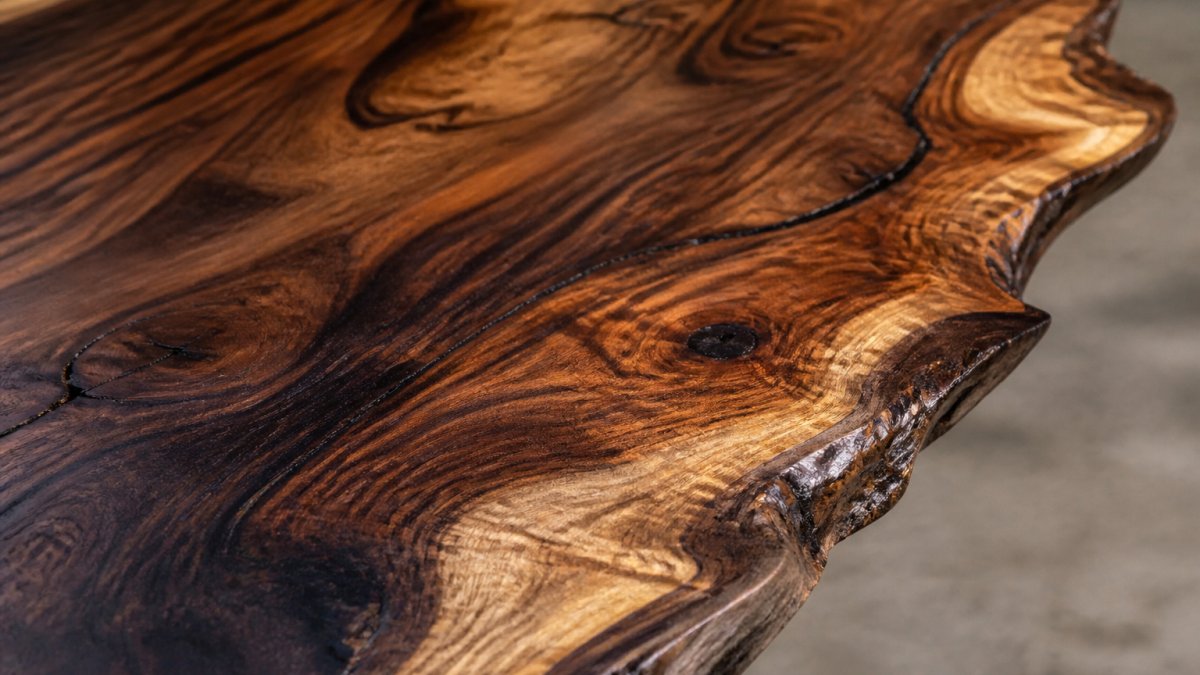
The slab's thickness matters more than most people realize. Thinner slabs (under 1.5 inches) are more prone to warping because they have less mass to resist moisture-driven movement.
Wood movement is inevitable, but it's manageable if the table is constructed properly. The wood will expand and contract with humidity changes, this is normal and expected. The question is whether the base design and joinery allow for this movement without creating visible gaps or structural problems.
Base Design and Stability
The base serves two functions: it supports the weight of the slab and people sitting at the table, and it accommodates the wood's natural movement. A poor base design will either restrict wood movement (causing cracking) or allow too much movement (causing wobbling and joint failure).
Look for bases that use these design principles:
- Breadboard ends or expansion joints: These allow the wood to expand and contract along its length without creating visible gaps.
- Floating base design: The base is attached in a way that allows the top to move independently, rather than being rigidly fastened.
- Cross-grain construction: The base runs perpendicular to the grain direction of the slab, which helps stabilize the whole piece.
When comparing tables from different retailers, ask how the base accommodates wood movement. If they say "it won't move" or "we've solved that problem," they don't understand wood. Wood moves. The question is whether the design allows for it gracefully.
Delivery, Returns, and Warranties: What to Expect
This is where many furniture purchases go sideways. You fall in love with a piece, buy it, and then discover the return policy is nonexistent or the warranty is worthless.
Ask these questions before you commit to any purchase:
- Delivery cost and timeline: How much does delivery cost, and how long will it take? Mt. Modern offers Arizona-wide delivery and free local pickup in Cottonwood and Show Low, which eliminates guesswork for customers in those areas.
- Return or exchange policy: If the piece arrives damaged or doesn't work in your space, can you return it? What's the window?
- Warranty coverage: What does the warranty cover? Structural defects? Finish damage? How long does it last?
- Damage during delivery: Who's responsible if the piece arrives damaged? Is there insurance? How do you file a claim?
The best retailers are transparent about all of this upfront. If you have to dig for answers or call multiple times to get a straight response, that's a signal about how they'll handle problems after the sale.
Pricing and Value: Making the Right Investment
Furniture pricing varies wildly, and it's not always correlated with quality. Understanding what drives price helps you avoid overpaying for hype and underpaying for quality.
Price is determined by several factors:
- Materials: Solid hardwood costs more than veneer or engineered wood. Rare wood species cost more than common ones.
- Labor: Hand-finished pieces cost more than spray-finished ones. Complex joinery costs more than simple assembly.
- Overhead: A small local maker has lower overhead than a large retailer with showrooms and staff.
- Markup: Some retailers mark up 200-300%. Others operate on 30-50% margins.
When comparing furniture retailers, look at what you're actually getting for the price. A cheaper piece might use inferior wood or construction shortcuts. A more expensive piece might be paying for brand reputation rather than actual quality. The goal is to find the intersection of quality and value, the best piece you can afford that will actually last.
One practical approach: identify pieces you genuinely like from different retailers, then compare them side by side on materials, construction, warranty, and price. This removes emotion from the decision and forces you to evaluate on actual criteria.
Handcrafted vs Mass-Produced: How to Spot the Difference
Here's what most people get wrong about "handcrafted" furniture: the term is almost meaningless without context. A piece can be handcrafted but poorly made. Conversely, some mass-produced pieces are excellent.
The real distinction is between pieces made by someone who cares about quality and pieces made to hit a price point. Handcrafted typically means someone spent time on each piece, sanding, finishing, adjusting joinery. Mass-produced means standardization and efficiency. Neither is inherently better, but they have different implications.
Signs of genuine handcrafted work:
- Minor imperfections: Hand-finished pieces often show slight variations in stain color or finish thickness. These aren't flaws, they're proof of hand application.
- Custom options: Can you request changes? Handcrafted makers usually accommodate customization. Mass producers typically can't.
- Maker information: Do you know who made it? Can you contact them with questions? Handcrafted makers often have a name and story. Mass-produced pieces are anonymous.
- Visible joinery: Hand-finished pieces sometimes show the actual joinery (pegs, mortises) as design elements. Mass-produced pieces hide everything.
When evaluating furniture retailers, ask about the makers. Who actually builds these pieces? Where are they located? How long has the maker been in business? These questions separate genuine craftsmanship from marketing language.
Choosing between furniture retailers comes down to understanding what matters most to you. If you value distinctive, high-quality pieces that will serve as genuine conversation starters in your home, Mt.
Frequently Asked Questions
How does Artes Imports compare with Brett Interiors for furniture quality?
When comparing handcrafted wood furniture retailers, consider their sourcing, construction methods, and material selection. The best choice depends on your design preference, budget, and whether you prioritize locally made versus imported artisan furniture. Visit showrooms or review product galleries to assess finish quality, wood selection, and construction details firsthand.
Is kiln-dried wood better for furniture?
Yes. Kiln-dried wood reduces moisture content to 8-12%, making it more stable and less prone to warping, cracking, or shrinking over time. This process removes internal stress in the wood and prevents movement caused by humidity changes in your home. Furniture made from kiln-dried wood holds its shape longer and resists seasonal swelling. When comparing furniture retailers, ask about their drying process and moisture specifications, this directly impacts durability and longevity of your investment.
What should I look for when comparing handcrafted wood furniture stores?
Evaluate wood sourcing and drying methods, joinery techniques (mortise-and-tenon joints are stronger than dowels or screws), finish quality and protective coatings, warranty coverage, delivery and return policies, and customer reviews mentioning durability. Request details on wood movement expectations for live-edge pieces, ask about customization options, and inspect samples for consistent craftsmanship. Compare pricing against materials used and construction time invested. Request references or photos of pieces in actual homes to assess how designs age and perform.
What questions should I ask before buying a live-edge dining table?
Ask about the wood species, drying process, and expected wood movement over the first year. Confirm the base construction and weight capacity. Inquire about finish type and maintenance requirements. Request information on warranty coverage for cracks, warping, or structural issues. Ask about delivery logistics, local pickup options, and return policies if the piece doesn't meet expectations. Request photos or videos showing the specific table you're purchasing, since each live-edge slab is unique. Understand customization options for base design, finish color, and sizing.