

Table of Contents
- Why Authentic Mesquite Furniture Matters
- How to Identify Real Mesquite Wood
- Solid Wood vs. Veneer Furniture
- Inspecting Joints, Fasteners, and Construction Quality
- Questions to Ask a Furniture Maker
- What to Look for in Handcrafted Mesquite Dining Tables
- Red Flags and Common Misrepresentations
- Frequently Asked Questions
Last Updated: October 12, 2026
Why Authentic Mesquite Furniture Matters
Authentic mesquite furniture is shaped by slow-growing trees, harsh desert conditions, and skilled hands. The difference between authentic mesquite and mass-produced imitations matters for durability, beauty, and value.
Mesquite grows in the Southwest's most challenging environments. Modern, we've seen how genuine handcrafted mesquite furniture becomes a centerpiece people treasure for years.

Identifying authentic handcrafted mesquite furniture protects your investment. Fake mesquite, poorly constructed pieces, and misleading claims flood the market.
How to Identify Real Mesquite Wood
Authentic mesquite wood has unmistakable characteristics. The grain patterns, color variations, and natural markings tell the story of where the wood grew and how it was finished.
Mesquite Species and Growth Characteristics
Furniture-grade mesquite comes from two species: velvet and honey mesquite. Both grow slowly in harsh desert conditions, creating their strength and distinctive appearance.
Velvet mesquite is softer but still durable; honey mesquite is denser and harder, ideal for tables and heavy-use pieces.
Look for makers who specify which species they use. That transparency signals knowledge and care.
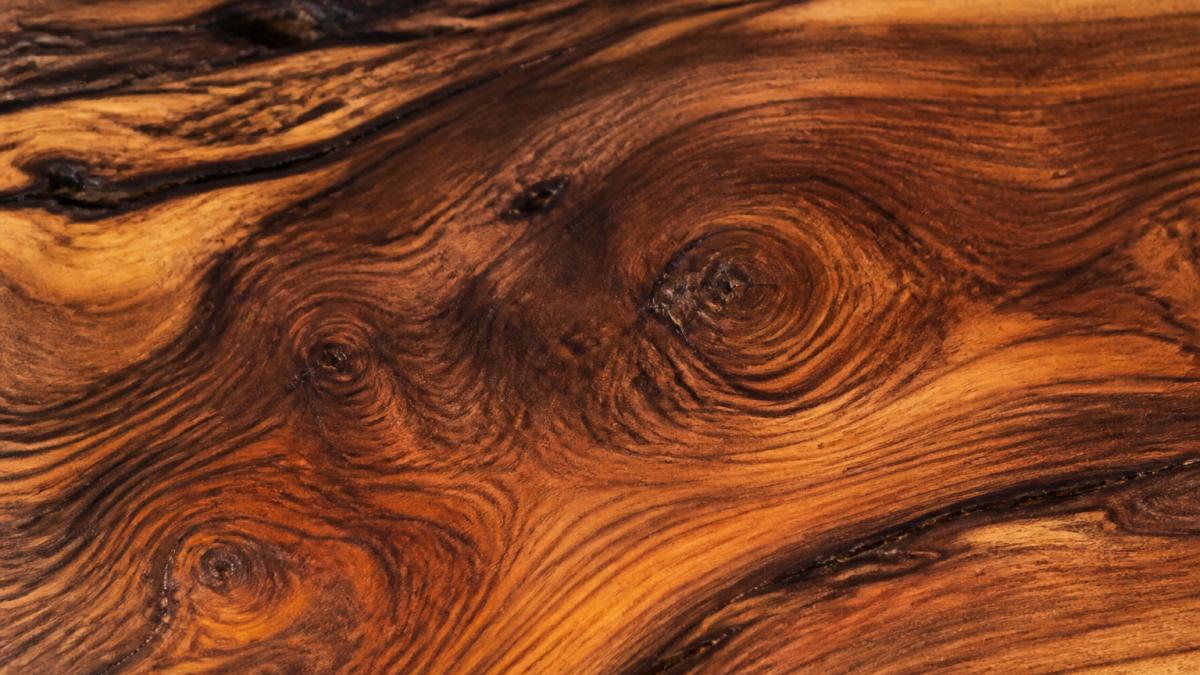
Color, Grain, and Natural Markings
Real mesquite displays warm tones: chocolate browns, honey golds, reddish undertones, and sometimes purple hues.
Natural markings are the hallmark of authentic mesquite:
- Knots appear throughout the wood, often dark and irregular
- Cracks and voids are common, especially in live-edge pieces
- Color variation shifts across the surface and through the thickness
These aren't flaws; they're proof the wood is real. Makers sometimes fill voids with black epoxy or turquoise inlay, which is legitimate when done well.
Beware of wood that looks too uniform. Perfect, identical grain patterns across multiple pieces suggest veneer or stain, not solid mesquite.
Solid Wood vs. Veneer Furniture
Solid wood versus veneer matters for durability, repairability, and authenticity.
Solid wood construction means visible surfaces are actual mesquite throughout, not just topped with a thin layer.
Veneer construction uses a thin slice of mesquite glued over plywood or particle board.
For handcrafted mesquite furniture, solid wood is the standard. Check undersides, drawer interiors, and backs: you should see mesquite, not plywood or veneer.
Inspecting Joints, Fasteners, and Construction Quality
How a piece is built determines whether it lasts decades or falls apart in years.
Strong joints are the foundation of quality furniture:
- Mortise-and-tenon joints are the gold standard: a tenon fits into a mortise, glued and often pinned, creating a strong, repairable connection.
- Dowels reinforce glued joints; multiple dowels per joint show careful construction.
- Proper gluing means joints are tight and flush, with no gaps or wobble.
Avoid furniture held together primarily by nails, staples, or screws alone; these loosen over time and lack the strength of traditional joinery.
Fastener inspection reveals construction quality:
- Screws should be countersunk and hidden under wooden plugs, not visible on top
- Staples should never appear on visible surfaces
- Nails are acceptable in hidden areas but not in load-bearing joints
Run your hand along all surfaces. Feel for rough edges, splinters, or gaps. Quality handcrafted pieces are smooth and well-finished.
Check drawers and moving parts: they should glide smoothly without wobbling or binding. Dovetail joints are a sign of fine craftsmanship.
Questions to Ask a Furniture Maker
A maker's willingness to answer specific, technical questions is one of the most reliable authenticity signals you have. The goal is to separate makers who know their material and process from sellers repeating marketing language.
Species and Sourcing
- "Which species is this, velvet mesquite or honey mesquite?" Velvet mesquite (Prosopis velutina) and honey mesquite (Prosopis glandulosa) differ in density and working characteristics. If the answer is just "mesquite," ask: "Do you know the species, or is it a mix?"
- "Where was the tree harvested?" Useful answers name a state, county, ranch, or property. "The desert" is not a sourcing answer.
- "Is this from a standing tree, a cleared tree, or reclaimed material?" Reclaimed mesquite from old fence lines, corrals, or demolished structures is legitimate but should come with a specific origin.
Drying and Material Preparation
- "How was the wood dried, and for how long?" Air drying takes much longer than kiln drying, and many shops use a combination. Properly dried mesquite is far less likely to crack, cup, or move after delivery.
- "Do you check moisture content before building?" A maker who monitors moisture content is thinking about long-term stability.
- "How do you handle cracks and voids?" Answers should describe a deliberate approach, such as stabilizing with epoxy, bowtie keys, or leaving voids as a design feature. "We just fill them" is weaker.
Construction and Joinery
- "What joints are used in the load-bearing connections?" Expect mortise-and-tenon, doweled joints, or other traditional methods. Screws and pocket holes aren't disqualifying alone, but shouldn't be the primary structure on heirloom furniture.
- "Is this solid mesquite throughout, or is any part veneered or built from a secondary wood?" Secondary woods in drawers, backs, or internal frames are normal; concealed veneer on visible surfaces is not.
- "Can you describe the finish?" Ask for the product category (oil, wax, lacquer, or a combination) and how many coats. A specific answer shows a repeatable process.
Documentation and Written Disclosures
Ask for, and expect to receive, the following in writing:
Mezquite II Wood-Back Dining Chair →
- A written statement of the species used
- A description of any veneer, secondary wood, or non-wood components
- The finish product and application method
A maker who provides these without hesitation backs their claims with process; one who resists putting anything in writing is telling you something too.
Reading the Answers
Specific, technical, consistent answers are the signal you want. Watch for:
- Answers that change between conversations
- Deflection when you ask about species, drying, or joinery
- Claims that a piece is "one of a kind" while the seller lists many near-identical pieces
None alone proves a piece is inauthentic, but together they shift the burden of proof onto the seller, where it belongs.
What to Look for in Handcrafted Mesquite Dining Tables
A dining table is where authenticity claims are easiest to test and easiest to fake. Use this checklist top to bottom, edge to edge, and underside to topside. Bring a tape measure, straightedge, flashlight, and damp cloth.
1. Start With the Top Surface
- Flatness. Lay a straightedge across the top in several directions. Small seasonal movement is normal, but noticeable rocking, cupping, or twisting suggests poor drying or a thin slab.
- Thickness. Measure at the edge. Tops under about 1.5 inches are more prone to movement; 2 inches or more are generally more stable and a common mark of serious slab work.
- Finish feel. Run your hand across the surface, checking for sticky spots, ridges between coats, sanding scratches, and uneven sheen. Quality finishes are smooth and consistent.
2. Inspect the Edges and End Grain
This is the most useful authenticity check on a finished piece.
- Edge grain. On a solid top, the edge shows the same wood as the face, with grain lines running through. On veneer, you may see a thin line where it meets the substrate, or a mismatched substrate.
- End grain. Solid mesquite shows end grain with visible pores and growth rings; a painted, capped, or abruptly different end is a warning sign.
- Live edge. The natural edge should be sanded smooth and finished, with bark stabilized or removed. Voids should be filled deliberately or left open as a design choice, never splintery or crumbling.
3. Check the Underside
The underside is where shortcuts hide.
- Flip the table or use a flashlight and phone camera to inspect it.
- On a solid mesquite top, the underside is mesquite, even if less finished than the top.
- Look for a different species, plywood, particleboard, or veneer. Any of these on a piece sold as solid mesquite is a material misrepresentation.
4. Examine the Base and Joinery
- Legs and pedestals. They should be solid, not hollow or veneered. Tap them lightly; a hollow sound can indicate a composite core.
- Load-bearing joints. Look where the apron meets the leg and where stretchers connect. Mortise-and-tenon and doweled joints are standard for heirloom work; visible screws or staples in structural joints are a downgrade.
- Racking test. With permission, gently press the table diagonally. A well-built table feels rigid; excessive wobble points to loose or undersized joinery.
5. Test the Finish and Color
- Damp cloth test. On a hidden area, such as the underside or inside an apron, wipe with a damp cloth. If color transfers, the piece may be stained rather than naturally colored mesquite.
- Color through the thickness. Real mesquite color runs through the wood; stain sits on the surface. Check end grain, edges, and exposed joinery.
- Sheen consistency. Uneven sheen often means uneven sanding or a rushed finish.
6. Look for Handcraft Evidence
Mass-produced furniture can imitate the look of handcrafted work, but rarely the evidence.
- Tool marks. Look for subtle plane marks, chisel marks, or hand-sanded transitions in less visible areas, normal in handwork and often absent in factory pieces.
- Variation between pieces. True handcrafted tables vary in grain, color, and proportion. A showroom of identical tables signals production-line manufacturing.
- Asymmetry where it belongs. Live edges, knots, and voids should be placed intentionally. If every piece has the same knot in the same place, you're looking at a pattern, not a tree.
7. Ask for the Paperwork Before You Pay
Before paying, request the written disclosures described above: species, veneer or secondary wood, finish, care instructions, and warranty. If reclaimed material is claimed, ask for the source. If the seller won't provide these in writing, treat that as a material fact about the piece.
A Note on Price and Value
Handcrafted solid mesquite dining tables are priced for material, drying time, joinery, and finishing labor. When a piece is priced far below comparable solid mesquite work, the likely explanations are veneer, a secondary species, stain over cheaper wood, or a production-line build. An unusually low price is a reason to run the checks above more carefully, not less.
Red Flags and Common Misrepresentations
Certain claims should trigger skepticism.
"Reclaimed mesquite" or "salvaged mesquite" sounds authentic but needs verification.
Uniform appearance across multiple pieces suggests they aren't truly handcrafted.
Staining to fake mesquite appearance is common: cheaper woods stained dark are sold as the real thing.
Extremely low prices for "handcrafted mesquite" are unrealistic.
No documentation or maker information is suspicious.
Pressure to buy quickly or refusal to answer questions suggests the seller has something to hide.
Claims of "one-of-a-kind" for mass-produced pieces are misleading.
At Mt. Our Mezquite II collection, for example, showcases sustainable mango wood with meticulous construction and finishes that highlight natural grain and character.

Frequently Asked Questions
How can you tell if furniture is made from real mesquite wood?
Real mesquite wood displays distinctive characteristics: rich chocolate to golden-brown tones, dense grain patterns with natural knots and voids, and significant color variation across the piece. Authentic mesquite is hard and durable, often sourced from velvet or honey mesquite species. Run your hand across the surface, genuine wood feels warm and has slight texture variations. Ask the seller for documentation about the wood source and species. Mesquite furniture from reputable makers includes information about whether it's solid wood or veneer construction.
What's the difference between solid mesquite and veneer furniture?
Solid mesquite furniture is constructed entirely from mesquite wood throughout the piece, including the frame, legs, and visible surfaces. Veneer furniture uses a thin layer of mesquite wood glued over a plywood or particleboard base. Inspect the edges, especially table edges and the underside of legs, solid wood shows consistent wood grain throughout. Veneer pieces show a distinct seam where the veneer meets the substrate. Solid mesquite costs more but offers superior durability and longevity. Ask sellers directly whether pieces are solid wood or veneered; reputable craftspeople disclose this upfront.
What questions should I ask a furniture maker about mesquite wood?
Ask about the mesquite species used (velvet or honey mesquite are furniture-grade), where the wood was sourced, the drying process and timeline, and whether the piece is solid wood or veneer. Request details about the construction method, mortise-and-tenon joinery is superior to staples or nails. Ask how natural variations like knots and cracks are handled (epoxy fill, left natural, etc.). Inquire about the finish type and how it protects the wood. Ask for references or photos of completed pieces in customer homes. Genuine craftspeople provide detailed answers and documentation; vague responses are a red flag.
Does natural variation in mesquite grain mean the piece is authentic?
Yes, natural variation is actually a sign of authenticity. Real mesquite wood exhibits inconsistent grain patterns, color shifts from chocolate to golden tones, knots, and voids, these are not defects but proof the wood grew naturally under harsh conditions. Uniform, perfectly consistent grain is a red flag suggesting stain or veneer. Each handcrafted mesquite piece should be one-of-a-kind due to these natural variations. However, variations should be intentional and finished well (epoxy-filled voids, sanded smooth). Poorly finished cracks or rough edges suggest careless work, not authenticity.