

Quick Summary
A custom mesquite wood table is a dining table built from dense, hard mesquite with dark tones and dramatic knots, mineral streaks and grain. Live-edge tops keep the tree's natural outline, while slab and base choices shape a modern or rustic look.
- Allow about 36 inches of clearance to walls, or 30 to 32 inches in tight rooms.
- A 72-inch rectangular table seats 6, and a 96 to 100-inch table seats 8.
- Allow roughly 24 inches of table edge per seated person.
- Keep indoor humidity between 35 and 55 percent to limit wood movement.
- Ask how the top attaches to the base, since rigid fixing risks splitting.
Table of Contents
- Why Mesquite Makes a Striking Custom Dining Table
- Live Edge Mesquite Table Designs That Keep the Natural Character
- Mesquite Slab Table Layouts and Grain Matching
- Mesquite Wood Table With Metal Legs and Other Base Styles
- Modern, Rustic and Mixed-Wood Design Directions
- Sizing, Seating and Customization Trade-Offs
- Caring for a Mesquite Dining Table Over Time
- Choosing Your Custom Mesquite Dining Table
- Frequently Asked Questions
Why Mesquite Makes a Striking Custom Dining Table
Last Updated: November 2, 2026
Mesquite wood is one of the most distinctive materials you can bring into a dining room, and a mesquite wood table with dark, rich tones and dramatic grain feels more like a sculpture than furniture. At Mt. Modern, we focus on live-edge dining tables and Arizona mesquite pieces because these designs turn a dining table into the conversation piece of the house.
Mesquite is a dense, hard wood. Its character comes from knots, mineral streaks, and natural variation in color. No two slabs look alike, which is why custom mesquite dining table design ideas appeal to buyers who want one-of-a-kind pieces.
Still, mesquite is not the only option. The sections below walk through the design directions we see most often, and what each one asks of you.
Live Edge Mesquite Table Designs That Keep the Natural Character
A live-edge top keeps the outer contour of the tree intact, so the table's edge follows the wood's original shape. This is the most common approach for buyers who want the piece to look unmistakably natural.
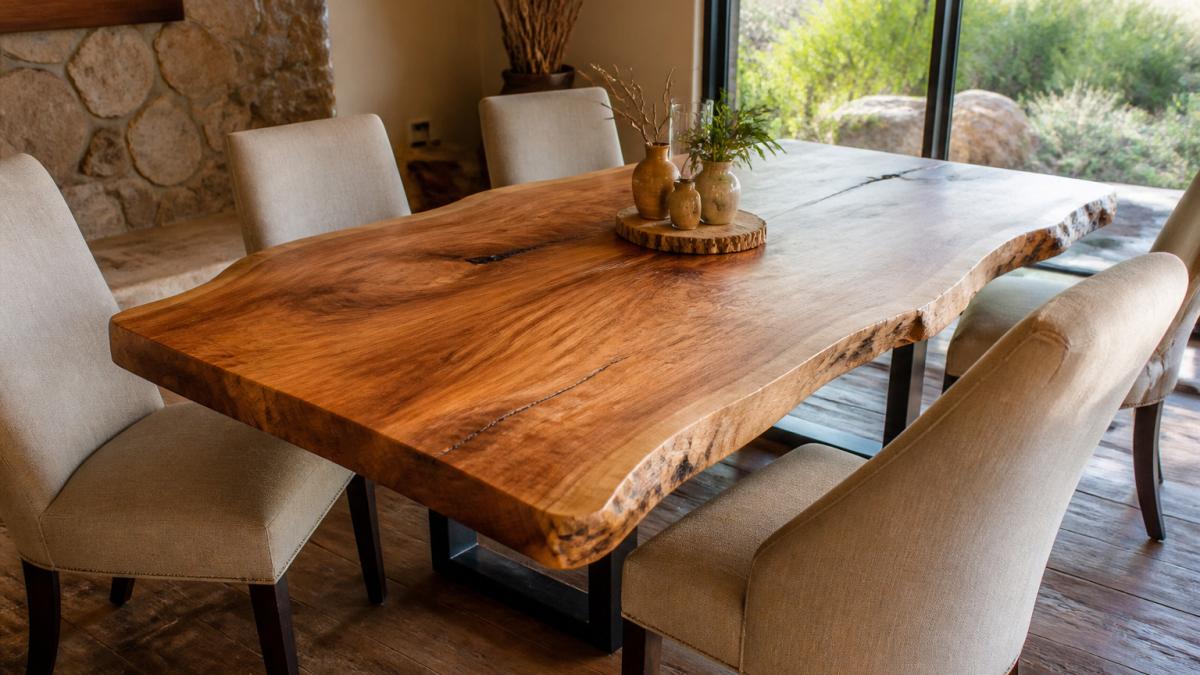
The Sparks Ridge Canyon Dining Table uses solid acacia with a softly sculpted live edge, and each tabletop is individually shaped by the wood. You can view the Sparks Ridge Canyon Dining Table to see how a U-frame base frames a natural edge.

When choosing a live-edge design, look closely at the edge itself.
Mesquite Slab Table Layouts and Grain Matching
A slab table is built from wide boards joined into a single top. Grain matching means arranging those boards so the patterns flow together across the surface. Well-matched slabs read as one continuous piece, while poorly matched ones can look disjointed.
Ask how the boards were selected and laid out before you commit. Our Natural Parota 95" Live-Edge Dining Table shows how a long live-edge top makes the grain the focal point.
Mesquite Wood Table With Metal Legs and Other Base Styles
The base does a lot of visual work. Metal legs keep the focus on the wood top and give the table a lighter, more architectural look. Stump-style and sculpted bases add more weight and a rustic presence.
The Sparks Ridge Summit Dining Table pairs a solid acacia top with an X-frame base, which is a useful reference if you want a clean, open look underneath.

Modern, Rustic and Mixed-Wood Design Directions
Mesquite pairs well with other materials. A dark resin inlay, a copper-toned epoxy accent, or a mix of woods can shift the table from rustic toward modern. The Raramuri Live-Edge Copper-Epoxy Dining Table is a good example of a modern take that keeps the natural wood character visible. The Balam 60" Round Dining Table offers a calmer, more architectural alternative for smaller rooms.
Think about the rest of the room first. Warm, earthy finishes suit a rustic space, while crisp lines and neutral tones suit a modern one.
Sizing, Seating and Customization Trade-Offs
Size is the first decision that constrains every other choice, and it is where most custom orders go wrong. Work backward from the room rather than forward from a table you like in a photo.
Start with clearance, not tabletop. A common planning rule is to allow about 36 inches of clearance between the table edge and any wall or obstruction so chairs can pull out and people can walk behind them. In tighter rooms, 30 to 32 inches is workable if the table is against a wall or traffic is one-directional. Measure the room, subtract that clearance on every open side, and the remaining footprint is your maximum table size.
Seating capacity follows length and shape. As a practical guide:
- A 60-inch round table comfortably seats 4 and can squeeze 6.
- A 72-inch rectangular table seats 6.
- An 80- to 84-inch rectangular table seats 6 to 8.
- A 96- to 100-inch rectangular table seats 8.
- Allow roughly 24 inches of table edge per seated person for comfortable place settings.
Round tables earn their space in square or narrow rooms because they have no corners to walk into, and they put everyone within conversation distance. Rectangular tables suit long walls and formal entertaining. Oval tops split the difference and soften traffic flow.
Sparks Ridge Canyon Dining Table →
Height and thickness matter more than buyers expect. The Sparks Ridge tables are 30 inches high. A thicker slab, 2 inches versus 1.5 inches, raises the visual weight and can require a taller base or adjusted apron to keep the finished height correct. If you are matching existing chairs, confirm seat height and knee clearance before finalizing slab thickness.
Where the money goes in a custom build. Cost is driven less by species than by these factors, roughly in order of impact:
- Slab size and rarity. Wider, longer, cleaner slabs with fewer defects cost more because they are harder to source. A book-matched pair from one tree adds cost but gives the most consistent grain.
- Thickness and milling. Thicker tops use more material and take longer to dry and flatten.
- Joinery and base. Complex joinery and hidden attachment hardware add labor.
- Finish. A hand-rubbed oil finish is labor-intensive but repairable; a sprayed conversion varnish is faster but harder to spot-repair.
- Inlays and epoxy. Resin inlays, metal accents, and mixed-wood layouts add design time and failure risk if the wood moves.
Lead time and payment. Ask whether the quoted price includes delivery and placement.
Customization trade-offs to weigh. Every added feature competes with something else. A thicker slab looks substantial but limits base options and raises cost. A live edge is striking but can reduce usable seating edge on the wavy side. A dark epoxy inlay hides cracks but draws the eye away from grain. Decide which two or three features matter most and let the rest stay simple.
The article gives these seating and clearance guidelines for choosing a table size.
| Table size | Seats | Note |
|---|---|---|
| 60-inch round | 4, squeezes 6 | Works in square or narrow rooms |
| 72-inch rectangular | 6 | Standard dining size |
| 80 to 84-inch rectangular | 6 to 8 | Mid-size rectangular table |
| 96 to 100-inch rectangular | 8 | Long rectangular table |
| Clearance to walls | About 36 inches | 30 to 32 inches in tight rooms |
| Table edge per person | About 24 inches | For comfortable place settings |
Caring for a Mesquite Dining Table Over Time
Mesquite is still wood, and it still moves. Understanding why it moves, and how a well-built table accommodates that movement, is the difference between a top that stays flat for decades and one that cups or cracks.
Why wood moves. Wood expands and contracts across the grain as humidity changes, not along the grain. A wide slab can move noticeably between a humid summer and a dry winter. Movement is part of how solid wood behaves, and it does not stop entirely. A common pattern is for a top to shrink slightly in winter heating season and swell in summer.
How good construction handles movement.
- Breadboard ends and battens allow the top to move while keeping it flat.
- Slotted or oversized screw holes in the base attachment let the top slide rather than split. A table screwed rigidly to its base in every direction is a red flag.
- Properly dried slabs. Ask for the moisture reading at the time of build.
- Crack and void treatment. Natural checks and voids are part of mesquite's character.
Everyday protection.
- Keep the table out of direct sun and away from heating and cooling vents. UV light darkens and can unevenly fade a finish; forced air dries one side faster than the other.
- Use coasters and trivets. A hot pan can still leave a ring in the finish.
- Wipe spills promptly, especially alcohol, citrus, and vinegar, which attack film finishes.
- Dust with a soft, slightly damp cloth and dry immediately. Avoid silicone polishes and harsh chemical cleaners, which can build up or dull the surface.
- Use felt pads under objects that slide and a table pad for heavy crafting or holiday serving.
Seasonal maintenance.
- Humidity. Aim for indoor relative humidity in the 35 to 55 percent range. A hygrometer is inexpensive and tells you when to run a humidifier in winter or a dehumidifier in summer.
- Oil finishes. A hand-rubbed oil or oil-wax finish benefits from reapplication every 6 to 12 months depending on use. Clean, apply a thin coat, let it soak, and buff off the excess.
- Film finishes. Polyurethane and conversion varnish need less frequent attention but are harder to repair. Small scratches can often be touched up with a matching repair stick; deep damage usually means refinishing the whole top.
When to call a professional. Lifting veneer, a cupped top, a widening crack, or a finish that has failed across a large area are signs to consult a furniture maker rather than attempt a DIY fix. Refinishing a solid mesquite top is straightforward for a professional and can restore a table for another generation.
Questions to ask before you buy. Ask the maker how the top is attached to the base and what finish was used and how it should be maintained.
Choosing Your Custom Mesquite Dining Table
Start by deciding what matters most: the natural edge, the base style, the room's overall look, and the size you need. Narrow those choices, then compare final candidates side by side. If you are weighing a round option, the Raramuri 59" Round Copper-Epoxy Dining Table is worth viewing as a final candidate.

Once you know the size, style, and finish you want, you can match your table to the room with confidence.
Frequently Asked Questions
What styles work well for a custom mesquite wood table?
Mesquite suits both modern and rustic interiors. Its dark, variable grain looks striking with a live edge kept natural, a clean sculpted profile, or a mixed-wood top. Clean, streamlined bases keep the look current, while heavier organic forms lean rustic. Mt. Modern's Mezquite II, Natural Parota and Riverwood tables show how the same natural character shifts between styles depending on the base and finish you choose.
How do you choose a base for a mesquite slab table?
Match the base to the weight and width of the slab and to the room. A wide, heavy top needs a base with solid legs or a broad frame so it sits steady. Industrial bases such as the Forge and Riverwood tables balance a substantial top visually. Check the table height, which for Mt. Modern's Sparks Ridge tables is 30 inches, and confirm the base suits how many people you plan to seat.
Are live-edge mesquite tables a good fit for modern interiors?
Yes. Live-edge tops add organic contrast to clean lines, sleek chairs and neutral walls. The key is keeping the rest of the room simple so the wood remains the focal point. A modern base, a restrained finish and a streamlined silhouette keep the table feeling current rather than overly rustic. Mt. Modern's Mezquite II table is an example of this balance.
How do you care for a mesquite wood dining table?
Wipe the surface with a soft, slightly damp cloth and dry it right away. Avoid harsh cleaners that can dull the finish. Keep the table away from direct sun and heat sources, which can dry wood and fade color over time. Use placemats or coasters under hot dishes and drinks. Because solid wood expands and contracts with humidity, keep indoor humidity stable to protect joints and the top.
